Freight guides · How-to
How to ship a pallet: a step-by-step guide
A pallet is the unit freight moves on — and shipping one well is a real skill. This is the complete guide: the glossary, the six steps, the pitfalls, and how cost actually works.
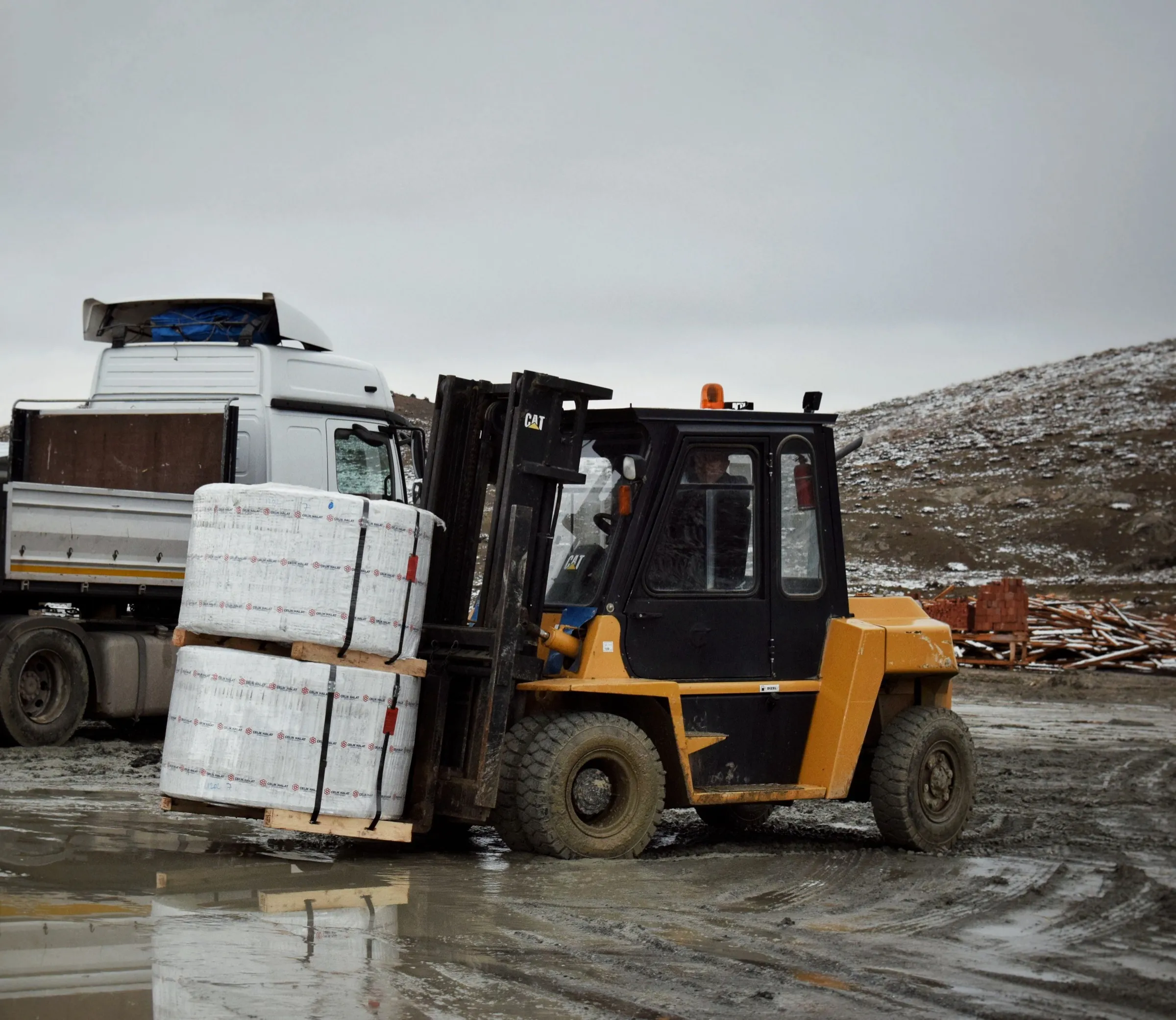
The pallet is the basic unit of freight. Almost everything that moves by truck moves on one — and shipping a pallet well is a genuine skill that saves you money and damage every time you do it right. This is the complete guide: the vocabulary, the six steps to ship a pallet correctly, the mistakes that cost shippers money, the tips the pros use, and how pallet shipping cost actually works. Read it once and you’ll never package a pallet badly again.
Pallet shipping: the ultimate guide
Shipping a pallet comes down to three things done in order: package the freight onto the pallet so it can’t shift or topple, secure it so it survives handling, and label it so it goes where it’s supposed to. Get those right and the rest — choosing a mode, getting a rate, booking the truck — is straightforward. Get them wrong and you’ve invited damage, reclassification, and delay. Everything below is in service of getting those three things right.
A pallet glossary
Before the how-to, a quick vocabulary. Knowing these terms helps you choose the right pallet and talk to your carrier clearly.
- Skid — a pallet with only a top deck and no bottom deck boards (just runners underneath). Skids are easier to drag but generally less sturdy for stacking than a full pallet. People often use “skid” and “pallet” interchangeably, but the distinction is real.
- Deck boards — the flat boards that form the top (and usually bottom) surface of the pallet, the platform your freight actually sits on. More and thicker deck boards mean a stronger, more stable platform.
- Stringers — the long, thick boards running between the top and bottom decks that give the pallet its height and structural strength. A stringer pallet is built around these. They typically allow forklift entry from two sides.
- Blocks — solid blocks (instead of stringers) used to separate the decks in a block pallet, allowing forklift and pallet-jack entry from all four sides. Block pallets are sturdier and easier to handle.
- Two-way pallet — a pallet a forklift can enter from two sides only (typically a stringer pallet). Cheaper, but it limits how the freight can be approached and loaded.
- Four-way pallet — a pallet a forklift or pallet jack can enter from all four sides (typically a block pallet, or a notched stringer pallet). More flexible to handle, faster to load and unload, and the safer default for freight shipping.
For most freight, a sturdy four-way (block) pallet in good condition is the right choice — it’s stable, it’s easy for handlers to move from any side, and it stands up to the repeated lifting freight pallets get.
How to ship a pallet (6 steps)
Here’s the process the pros follow, step by step.
1. Package and protect the freight
Start with the items themselves. Box each item in a sturdy corrugated carton sized to its contents — no half-empty boxes that can crush, no overstuffed ones that bulge. Cushion fragile items inside their boxes so nothing rattles. Seal every box well. The goal is that each carton is a solid, stackable unit before it ever goes on the pallet. A pallet is only as strong as the weakest box on it.
2. Seal and reinforce the boxes
Tape every box closed with quality packing tape using the H-taping method (down the center seam and across both ends). For heavier or denser items, double-box or reinforce corners and edges. This step is about making each box survive both the weight of whatever sits on top of it and the jostling of transit. Skimp here and the bottom layer crushes under the top one.
3. Choose the right pallet
Pick a pallet that fits your freight and is rated for the weight. Use a sturdy, undamaged pallet — no cracked deck boards, no broken stringers, no protruding nails. Favor a four-way block pallet so handlers can approach it from any side. The pallet should be slightly larger than the footprint of your stacked freight is acceptable, but freight should never overhang the edges — overhang is the single most common cause of pallet damage, because anything sticking past the edge gets crushed against other freight and the trailer walls.
4. Load and secure the freight
Stack boxes on the pallet like bricks: heaviest on the bottom, lightest on top, in even layers with the weight distributed across the whole platform. Keep the stack square and stable — a leaning or pyramid-shaped stack will topple. Don’t stack so high that the load becomes top-heavy; a lower, denser, well-distributed stack is far more stable than a tall one. Interlock the boxes between layers where you can, like a brick wall, so the stack holds together.
5. Wrap, band, and add load protectors
Now lock the stack to the pallet. Stretch-wrap the entire load tightly, starting at the base and wrapping up and over, anchoring the bottom layer to the pallet itself (wrap around the pallet’s deck, not just the boxes). Apply several tight passes — a loosely wrapped pallet shifts and fails. For heavy or critical loads, add banding/strapping over the wrap to physically strap the freight to the pallet. Use edge protectors (cardboard or plastic corner pieces) under the banding to keep straps from cutting into boxes and to reinforce the load’s corners. Cap the top with a corner board or load cap if the top layer needs protecting. The finished load should feel like a single solid unit — push on it and nothing moves.
6. Label the pallet clearly
Finally, label it. Affix shipping labels and the bill of lading (BOL) clearly on the pallet, ideally on more than one side so the label is visible no matter how the pallet is oriented. Include origin, destination, and any handling instructions (“Fragile,” “This Side Up,” “Do Not Stack”). Make sure the freight class and weight on the BOL are accurate. A pallet with a missing or hidden label is a pallet that gets misrouted or held — and an inaccurate class invites a reweigh and a corrected bill at the terminal.
Pitfalls to avoid
The most common mistakes that turn a routine pallet into a damaged claim:
- Overhang. Freight extending past the pallet edge is the number-one cause of damage. Keep everything within the footprint.
- A top-heavy or uneven stack. Heavy on top or weight on one side makes a load that topples in transit. Heavy-low, even, and square.
- Loose or insufficient wrap. A few casual passes of stretch wrap isn’t securing — it’s decoration. Wrap tightly, multiple passes, anchored to the pallet.
- A damaged or wrong-size pallet. A cracked or undersized pallet fails under load. Inspect it; replace it if it’s compromised.
- Wrong or missing freight class. Guessing the freight class — or leaving it off — is how you get a surprise reclass and a corrected bill. Calculate it.
- Poor or hidden labeling. A label only on one side, or buried under wrap, gets missed. Label visibly, on multiple sides.
Smart tips
A few habits that separate a clean pallet from a problem one:
- Calculate density before you book. Freight density — weight divided by cubic feet — drives freight class, which drives your LTL rate. Knowing it before you quote avoids surprises and helps you choose the cheapest mode.
- Don’t overbuild a small load — and don’t underbuild a heavy one. Match the packaging effort to the freight. A single sturdy pallet beats two flimsy ones.
- Take a photo of the finished pallet. A timestamped photo of a properly packaged, undamaged load is useful evidence if a damage claim ever comes up.
- Keep the BOL accurate. Honest weight and class up front means the bill you’re quoted is the bill you pay.
- Ask a broker before you guess. A good broker classifies your freight, sizes the mode, and tells you how to package it — before it ships, not after it’s damaged.
Pallet shipping cost (PTL, LTL, FTL)
What does it cost to ship a pallet? The honest answer is it depends — pallet shipping is quote-based because price hinges on weight, class, distance, and mode. But the biggest lever you control is the mode, so here’s how the three options price:
- LTL (less-than-truckload) — for 1 to roughly 6 pallets (about 150–15,000 lbs). Your pallets share a trailer with other shippers’ freight, and you’re priced by freight class, weight, and lane plus any accessorials (liftgate, residential, limited access). LTL is the economical choice for small palletized shipments — but class-based pricing means getting the class right is everything.
- PTL (partial truckload) — for roughly 6 to 18 pallets (about 5,000–25,000 lbs). Your freight shares a truck with one or two other loads but isn’t broken down and reclassified like LTL. You’re priced by the space and weight you occupy, and the freight loads once with far less handling — often cheaper and gentler than LTL at this size.
- FTL (full truckload) — for loads that fill a trailer (roughly 18+ pallets) or need a single, uninterrupted run. You pay for the whole truck, but your freight rides alone with no transfers — the fastest, lowest-risk option for large loads.
The cost mistake shippers make most often is staying in the wrong mode: paying class-based LTL prices on a load that’s grown big enough that PTL would be cheaper and gentler, or booking a full truck for freight that doesn’t fill one.
Comparing rates and carriers
Once you know your pallet count, weight, density, and class, comparing rates is the last step — and it’s where a broker earns its keep. Rather than calling carriers one at a time, a broker prices your shipment against an entire network and tells you which mode and which carrier wins on your specific lane.
That comparison is the whole point of working with a broker. RS Group sources from a network of 34,000+ carriers, so when you send us a pallet to ship, we classify it, size the mode, shop it across the network, and come back with a real rate — and a real person who follows it to the dock. Skip the one-by-one carrier calls and the wrong-mode overpaying.
Ship your pallet right
Shipping a pallet well is package, secure, label — done in that order, with the right pallet and the right mode. Follow the six steps, avoid the pitfalls, calculate your density and class, and you’ll ship freight that arrives intact at a rate that makes sense.
When you’d rather hand it to people who do this every day, that’s us. Estimate your freight class and density with our free tools, compare LTL, PTL, and FTL, then get a freight quote — and we’ll handle the class, the carrier, and the load from pickup to delivery.